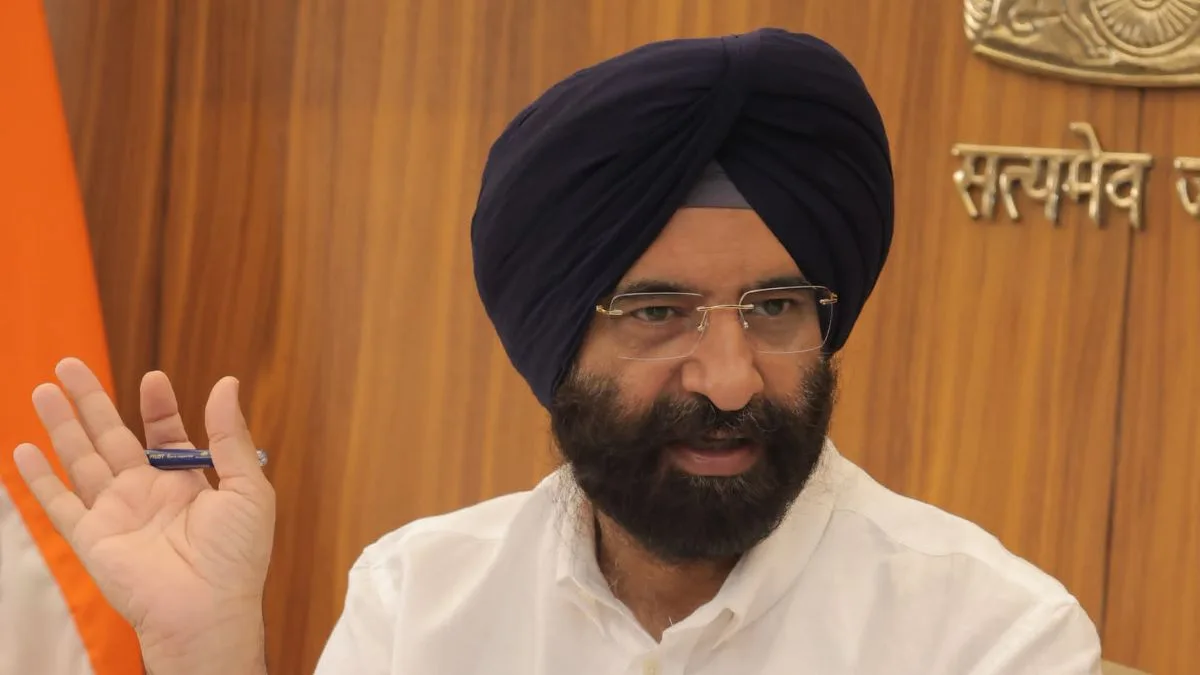
Delhi Environment Minister Manjinder Singh Sirsa on Monday inspected the Common Effluent Treatment Plants (CETPs) located in Okhla, South East Delhi, along with senior officials and conducted a comprehensive review of the measures being implemented to make the Yamuna pollution-free.
During the inspection, Sirsa reviewed the Biological Oxygen Demand (BOD) levels while assessing the functioning of the CETPs, treatment flow capacities, and the overall operational efficiency of the facilities.
Advertisement
Sirsa said, “We are actively working on decentralising Sewage Treatment Plants (STPs) and CETPs wherever feasible, constructing new facilities where required, and upgrading existing infrastructure wherever necessary.”
“A massive and comprehensive effort is underway to ensure that clean water flows into the Yamuna,” he added.
According to Sirsa, previous governments made numerous promises over the past 25 years regarding the upgradation of CETPs, but no substantive work was executed on the ground.
He assured that under the leadership of Chief Minister Rekha Gupta, the present government is fully focused on upgrading these systems, ensuring improved monitoring, and operating them effectively so that the water discharged into the river through these CETPs is thoroughly treated and clean.
Notably, the Okhla CETPs have a combined capacity of over 24 MLD (million litres per day).
Sirsa also shared that the National Environmental Engineering Research Institute (NEERI) is currently conducting a detailed survey aimed at upgrading the technology and enhancing the overall efficiency of these systems.
“It is only when the CETPs function correctly and efficiently that the River Yamuna will truly receive a new lease of life,” the minister added.
Sirsa said industrial waste is a major contributor to Yamuna pollution, and CETPs are critical facilities where such pollution can be intercepted before it enters the river.
Highlighting the urgent need for technological modernisation, Sirsa said many CETPs currently operate on technology that is nearly 20 to 25 years old. He noted that in today’s rapidly evolving world, technologies require periodic upgrades to remain effective and relevant.
Apart from this, the government’s larger Yamuna rejuvenation initiative includes sanctioned projects worth over Rs 1,000 crore. These projects include the setting up of 12 new STPs, the upgradation of the Keshopur STP, rehabilitation of trunk sewer networks, and extensive rainwater harvesting initiatives.